Project
Mitzpe Uriel
A lookout and orchard in memory of Staff Sgt. Uriel Silverman, of blessed memory. I took it from idea to permits, builders and crowdfunding, while studying and serving in the reserves.

Ori David Hirshfeld
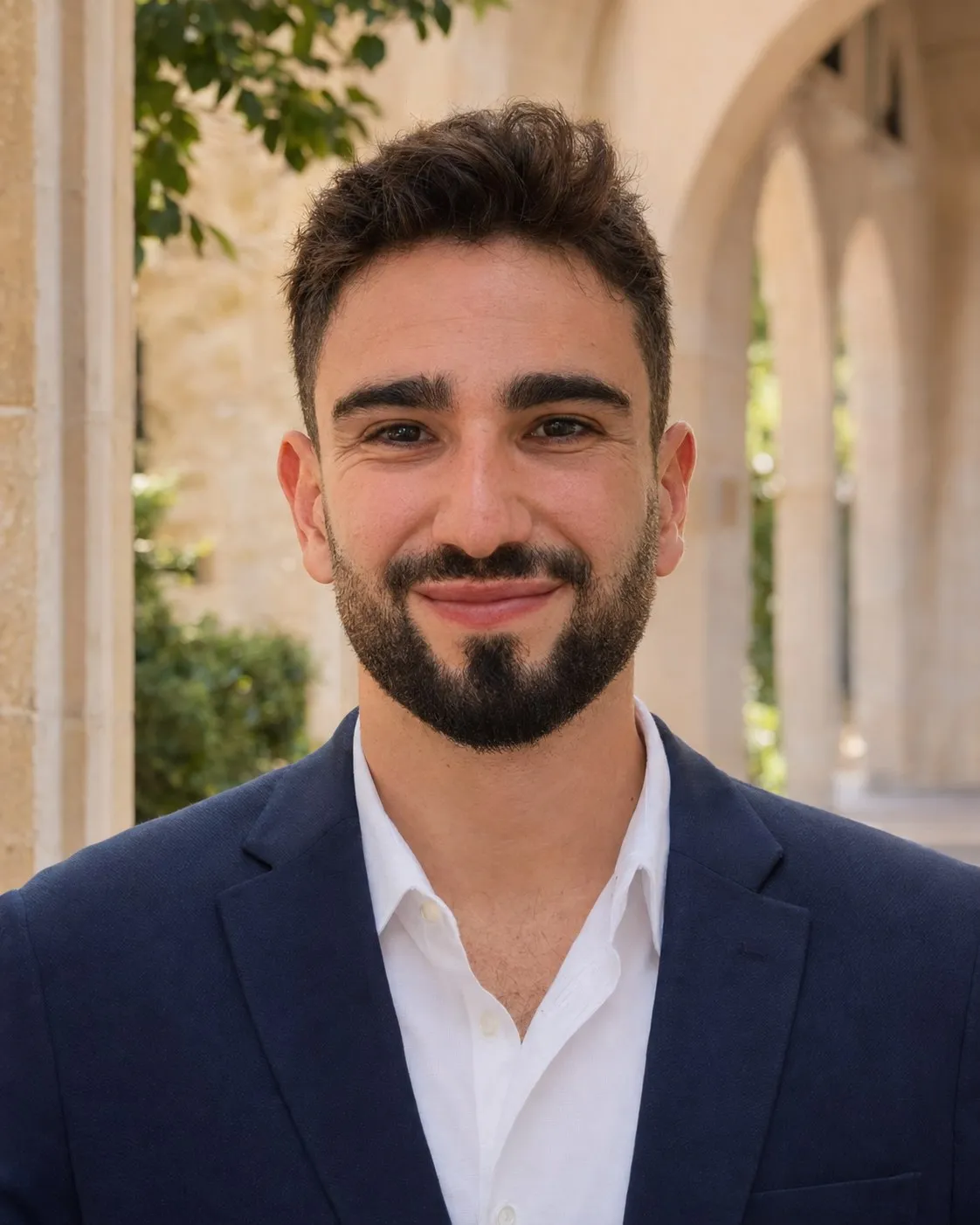
I’m a dual-degree law and accounting student at the Hebrew University of Jerusalem, with an exchange at Stanford Law School (2026–27), taking courses offered in partnership with the Graduate School of Business. I work where law, strategy and AI meet: researching and designing strategies for businesses that move to AI-based models, and using AI to solve legal problems in policy and in business.
JerusalemHebrew University, from 2024
StanfordLaw School, 2026–27
2010–2018
A counselor in Bnei Akiva, running educational activities for 14–15-year-olds and leading community fundraisers for organizations such as Kav LaChaim, ALUT and Krembo Wings. From 2014, a volunteer counselor at ILAN, supporting children with intellectual disabilities and autism.
2020–2023
A combat soldier in the Combat Engineering Corps, including the combat medic course. In 2022–2023 I also mentored boys from families without a Jewish background toward their bar mitzvah, through Tzohar.
From December 2023
A combat medic in the Alexandroni Brigade, with medical responsibility in the field and at the battalion aid station. More than 200 days of reserve duty while keeping my academic standing.
2024
I began the dual degree at the Hebrew University, combining legal reasoning with financial analysis. I also co-managed Beit Melchett café, which taught me operations the way only a busy café can. Dean’s List in both the Faculty of Law and the School of Business Administration.
2025
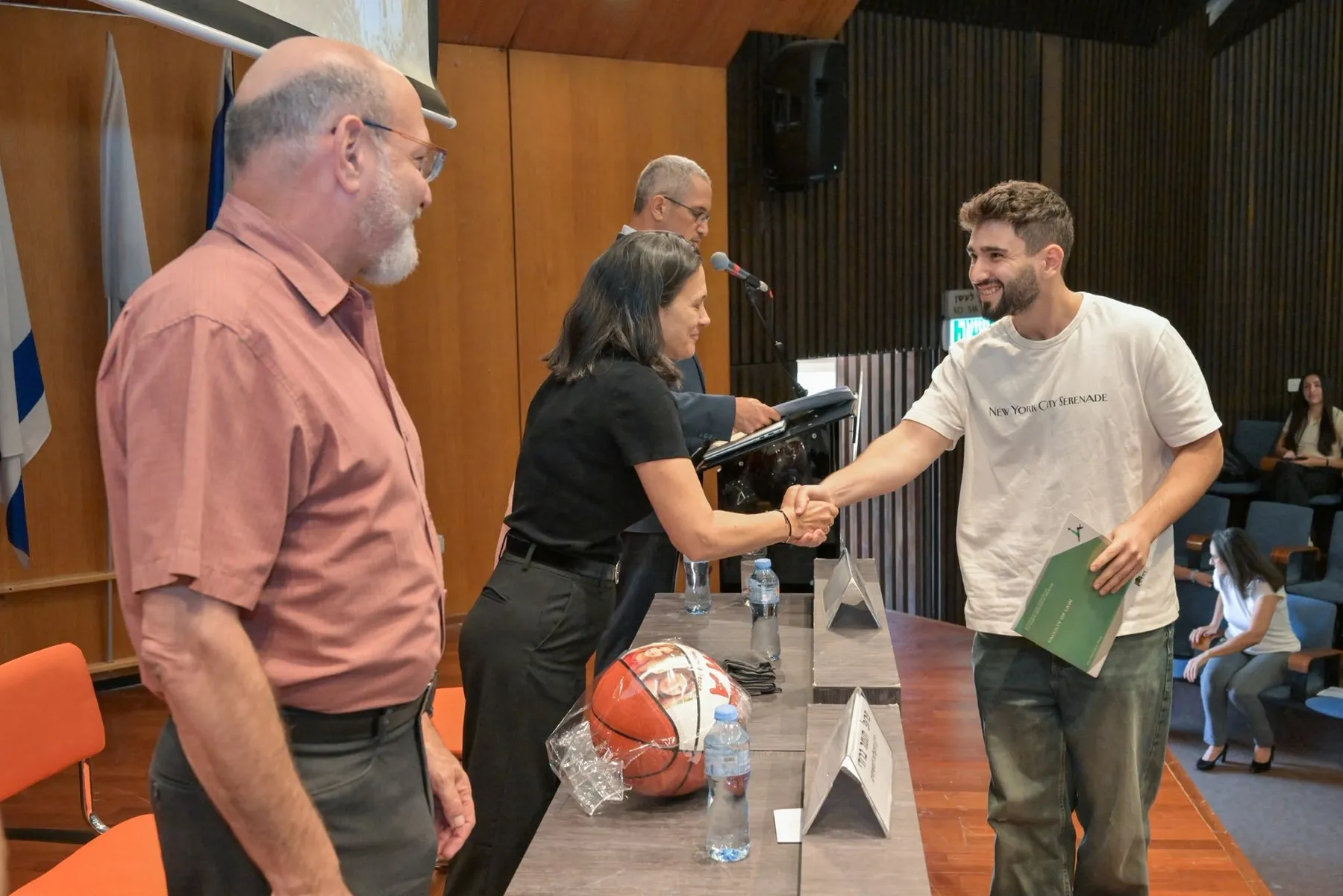
Research assistant to Prof. Asaf Eckstein in corporate law, and a summer at Shtainmetz Aminoach & Co. (a UHY member firm), drafting opinions on Israel’s trapped-profits regime. Awarded the Israel Institute of CPAs Excellence Scholarship and the Meitar Fellowship, and began tutoring students through the university’s Equal Opportunity Unit.
2026
Research assistant at Israel’s Ministry of Justice on AI and corporate governance, a member of the EmpiriCon Lab, and research with Prof. Gideon Parchomovsky. An exchange student at Stanford Law School (2026–27), with courses in private equity, capital markets and AI governance. Some are offered in partnership with the GSB, and Governing Artificial Intelligence: Law, Policy, and Institutions brings together Stanford’s Computer Science, Law and Philosophy departments.

Research, policy and a few things built by hand.
Project
A lookout and orchard in memory of Staff Sgt. Uriel Silverman, of blessed memory. I took it from idea to permits, builders and crowdfunding, while studying and serving in the reserves.
Israel Ministry of Justice, from 2026
Comparative and doctrinal research on AI, corporate governance and market structure, contributing to a scholarly article with the Head of Department.
With Prof. Asaf Eckstein, 2025–2026
Research memoranda on case law from Delaware, Texas, New York and Nevada for U.S.-published scholarship, and a co-authored empirical article.
Policy and business
On the policy side, research on how AI reshapes corporate governance and regulation. On the business side, custom skills and plugins for Claude and ChatGPT, built into legal research workflows.
Empirical constitutional research with Prof. Neta Barak-Corren, applying quantitative methods to public-law questions.
Research support for Prof. Gideon Parchomovsky on corporate law and contract theory.
Legal opinions and strategic reviews on Israeli tax and corporate law at a UHY member firm.
Research and strategy for companies moving to AI-based business models.
I help businesses and founders build an AI strategy that fits their situation, then turn it into something that works.
I bring legal and financial training, research on AI governance, and Stanford coursework on governing AI. AI capabilities, working alongside human expertise, multiply what people can achieve.
I offer strategy and implementation support, not legal advice or accounting opinions.
Moving a business toward revenue built around AI use. I research the options, test the economics and map a realistic path.
A good fit for a company or founder weighing a move to usage-based or AI-led revenue.
A targeted fix for a specific problem, such as a slow research workflow, a document-heavy review or a repetitive legal process. I design the AI workflow and review its output myself.
A good fit for a defined bottleneck with a clear owner.
Practical policies and guardrails so a team can use AI tools without exposing confidential data or creating regulatory risk.
A good fit for teams adopting AI tools under confidentiality duties.
A short conversation to define the problem and what success looks like.
I research the options, the risks and the economics.
A tailored strategy or a working AI workflow that pairs your team’s know-how with AI for sharper, faster results.
Choose how far I stay involved, from a single handover to ongoing support.
A defined problem, solved and handed over. I design the solution, deliver it with clear documentation, and make sure your team can run it on its own.
Best for: a single, contained problem.
Longer support to build the solution into how your business works: a new operating system or business model, adapted to your processes, with onboarding for the people who will use it.
Best for: changes that touch several people or processes.
Everything in Implementation, plus continued fine-tuning over time: monitoring how the system performs and improving it as your business and the tools change.
Best for: businesses that want the system to keep getting better.
Corporate law, in its nature, serves to provide a wide normative framework for firms and corporate constituents alike. Due to the field’s dynamic nature, corporate legal standards continuously update in line with new challenges that are posed by market players, especially within the court system. The judiciary plays an essential role in interpreting corporate regulation and generating normative rules and standards for years to come, especially through ad-hoc, fact-intensive inquiries that require judges to pick apart complex economic disputes.
There is just one problem: Israeli corporate law is still laden with indeterminacy. Firms and other corporate constituents severely lack normative guidance with respect to the various legal standards in corporate law, including fiduciary duties, judicial review and related-party transactions. Similarly, parties are quick to take advantage of alternative methods of dispute resolution, where quiet agreements limit the ability of practitioners to develop normative takeaways from those respective disputes.
One aspect of corporate litigation is particularly impactful in this respect: the court-approved settlement. Judicial proceedings involving corporate law are often times resolved through settlement agreements, which are then subsequently approved by judges – generally, with minimal intervention or normative guidance. As a result, fact-intensive rulings with potential normative consequences are replaced with simple, individualized resolutions.
To take a deeper look into the phenomenon, we hand-collected and analyzed a dataset of 116 in-court settlements approved by Israeli judges who specialize in corporate law, including judges in the Economic Courts in Tel Aviv and Haifa. We examined these cases across a number of different criteria, including the respective topic in corporate law; the level of judicial intervention; the methods through which judges, if at all, intervened; the stage of litigation where the settlement was approved; the extent of plaintiffs’ awards and attorney fees; and the involvement of arbitrators prior to the settlement.
In light of our findings, we discuss timely policy implications that serve to contextualize the institution of court-approved settlements in corporate litigation. We illustrate the evergrowing necessity of normative statements and expanded rulings within the context of court-approved settlements, where judges can voluntarily discuss their initial views with respect to the relevant legal disputes.
I study both because the best questions sit between them. A settlement is a legal choice and a financial one, and a governance rule is only as good as the numbers that test it.
I research corporate law and capital markets, and lately how AI changes the way companies are governed and the way they make money. I use AI to solve legal problems on both sides of the table: in policy, where the question is how to govern it, and in business, where the question is how to build with it. I like work that ends with something real: a paper, a policy memo, a memorial lookout.
Away from the library I’m a reservist and combat medic, a tutor, and someone who will cook for a crowd at any excuse.
I’m open to research collaborations, internships, AI strategy projects, and ventures at the edge of law, finance and technology.